
Inside Chickasaw Property Tax Records
Several offices share the tax record, so a complete inquiry touches more than one. The assessor keeps the appraisal and the land roll. The collector issues bills and takes payments. The Board of Supervisors adopts the roll and hears objections. Later tax-sale and redemption records sit with the Chancery Clerk.
| Field | What It Shows | Where |
|---|---|---|
| True value | Statutory appraisal base | Assessor |
| Assessed value | True value times class ratio | Land roll |
| Exemption | Qualified tax relief | Assessor |
| Bill and status | Due, paid, or delinquent | Collector |
| Sale/redemption | Later delinquency trail | Chancery Clerk |
Classification drives the math. Mississippi assesses Class I owner-occupied single-family real property at 10 percent of true value, and other Class II real property generally at 15 percent. Assessed value is not a sale price. Millage is applied after classification, and exemptions can shift the taxable result again.
January 1 Sets the Roll Owner
January 1 sets the tone for the whole tax year in Chickasaw County. Whoever owned the parcel that day is the name the assessor carries on the roll. A sale closed later can still leave the prior owner of record listed. That is why a fresh deed matters. Match the roll year against the newest deed. Do not assume the assessed owner still holds title. Bills go out in November or December. Payment comes due February 1, though holidays can shift that date.
Chickasaw Homestead Calendar
Homestead applications run January 1 through April 1 with the assessor. Reapplication can be required after a change in ownership, use, occupancy, marriage, divorce, remarriage, death, disability, or Veterans Affairs status. Treat a homestead entry as a tax clue, not proof of occupancy or title.
Look Up a Chickasaw Tax Bill
The county publishes no local tax-bill portal. Begin with the state Tax-For search. Then call the Tax Assessor/Collector at 662-456-3327 in Houston or 662-447-2242 in Okolona. Ask for the year, parcel or PPIN, class, values, exemption, millage, amount due, payment, and delinquency status. The state search screen lists search fields only. It does not display a current county bill.
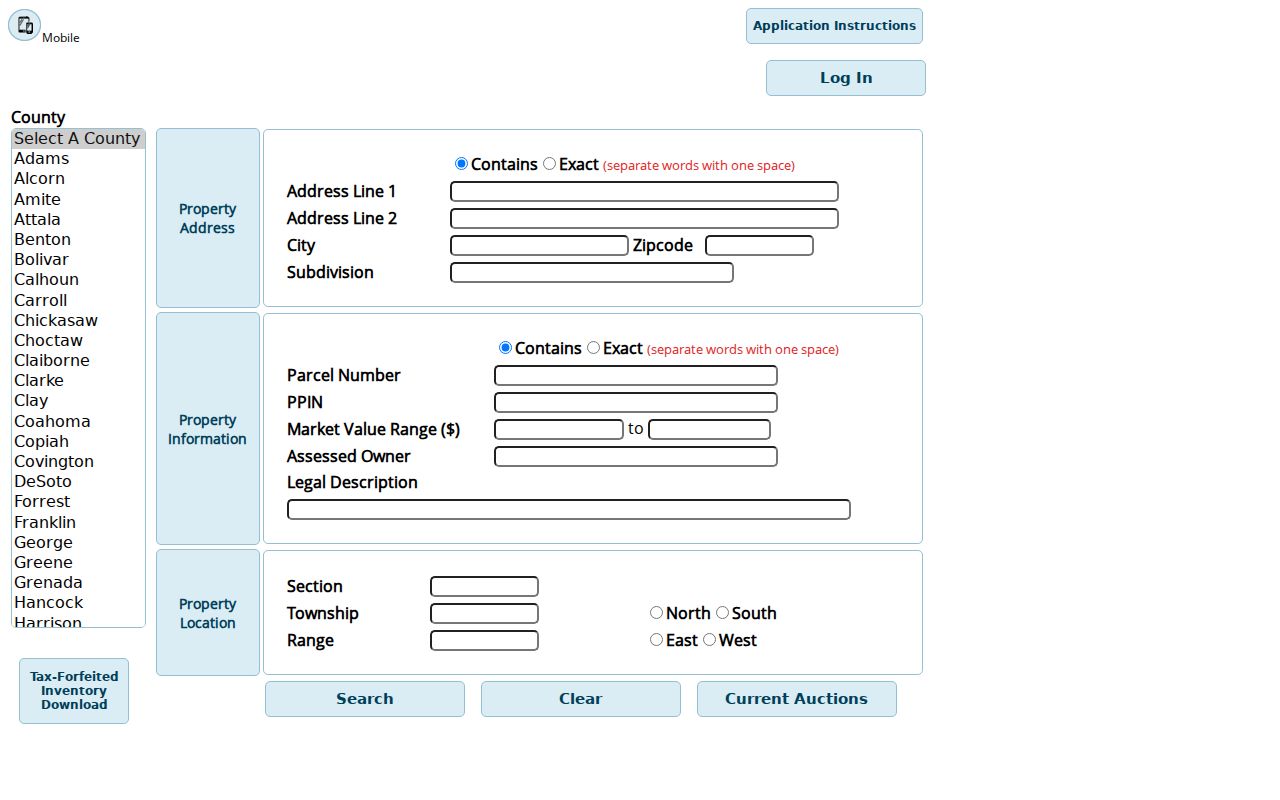
Treat any result as a locating tool and confirm the local record with the collector.
- Locate the parcel and verify the tax year.
- Ask the collector for bill and payment status.
- Compare class, ratio, and exemptions.
- Check Chancery tax-sale and redemption records if delinquent.
- Assessed value
- The ratio-adjusted tax base.
- Millage
- The local rate applied to assessed value.
- Homestead exemption
- Qualified property-tax relief.
- Tax lien
- A claim tied to unpaid tax.
Appeal a Chickasaw Assessment
Start with the assessor. Identify the parcel, roll year, class, true value, assessed value, and the fact you dispute. Gather deeds, surveys, plats, photographs, appraisals, and comparable sales. Objections normally go to the Board of Supervisors. The deadline is the first Monday in August preceding the tax due date. Confirm the year's notice and method through Mississippi DOR appeal guidance and the county.
Appeal window. Chickasaw objections normally reach the Board by the first Monday in August. Verify the current notice and do not wait for the bill.
From Delinquency to State Inventory
Unpaid tax can trigger an annual sale. The redemption record is kept by the Chancery Clerk. Land left unredeemed may reach the Secretary of State's Tax-Forfeited Inventory. The SOS launched a new tax-forfeited GIS map in May 2025. That map is not the county's bill ledger. Confirm each stage, date, and redemption status.
Request Offline Tax Records
An identifiable record can be requested under the Mississippi Public Records Act. Name the parcel, year, record type, format, and delivery method. Also ask for an advance fee estimate. For historic research, MDAH Series 1202 preserves selected Chickasaw tax rolls from 1836 onward. Those images answer history questions, not today's balance.
For a complete local response, request the adopted land-roll entry and the January 1 assessed owner. Include situs and mailing addresses. Ask for land and improvement values, total value, class and ratio, exemptions, millage, tax due, payment date, delinquency, and any tax-sale or redemption reference. Ask whether the office can email the maintained record or requires counter inspection. Copy and receipt fees are not published, so a cost estimate beats an assumed amount.
The Public Records Act does not create a record the office does not maintain. Nor does it turn private income-tax material into a public parcel record. Ask for the public land roll or assessment entry rather than an individual tax account. If part of a responsive record is exempt, request the non-exempt portions after redaction. Keep the response and the year shown, because a later roll may legitimately differ.
Who Keeps Each Tax Stage
Assessor and collector roles can blur in a search result. Yet each stage of the tax year leaves its own evidence. The Tax Assessor/Collector supplies appraisal, classification, exemptions, bills, and receipts. The Board of Supervisors adopts the annual roll and hears valuation objections. Tax-sale and redemption material belongs to the Chancery Clerk. The Secretary of State matters only when unredeemed land enters the state inventory process.
A buyer or heir checking a parcel should ask separate questions. What value and class were on the adopted roll? Which exemptions applied, and was the bill paid? If not, did a sale occur, and was the interest redeemed? Has the land reached the state inventory? One statewide search screen cannot answer every stage. The available Tax-For image is not a current county bill.
Class and Millage Need Context
The class ratio is where every Chickasaw County tax figure starts. True value becomes assessed value through a statutory percentage. Class I applies to qualified owner-occupied single-family homes at 10 percent. Class II covers other real property at 15 percent. Public utility property falls under Class IV at 30 percent. Personal property and motor vehicles sit in separate statutory classes. Mixing them into a real-property comparison only distorts the numbers.
Local millage then gets applied to assessed value. Exemptions adjust the taxable outcome under their own rules. A recorded deed price proves one sale, nothing more. It is not true value, assessed value, or the final tax bill. When preparing an objection, compare like years and like classes. That way the argument holds up before the Board.
Build an Assessment Appeal File
A strong objection names a concrete error. Check acreage, the building description, classification, condition, exemptions, and land and improvement values separately. Match the assessor's stated year against photographs, a recent qualified appraisal, a survey or recorded plat, repair evidence, and comparable parcels nearby. A bill that simply feels high gives the Board little to work with. A documented mismatch gives it plenty.
File through the procedure stated in the current roll notice. Keep proof of delivery and copies of every attachment. If the dispute moves past the county step, follow the current Department of Revenue appeal and hearing guidance instead of an old deadline summary. The first-Monday-in-August date is the normal county objection point. The official notice controls the live filing details.
The statewide Tax-For form can identify the property before any phone or counter request. Search fields include County, address in Contains or Exact mode, city, ZIP code, subdivision, Parcel Number, PPIN, market-value range, Assessed Owner, legal description, and section-township-range. Results appear ten at a time. Next advances the grid, Show Details opens the details route, and Print Property Details creates a printable view. Details such as owner mailing address, land value, improvement value, sale history, sketch, and exemption history should be confirmed with the office rather than assumed.
Homestead changes deserve prompt attention because the application window is limited. A new deed, a change in use or occupancy, an altered legal description, marriage, divorce, remarriage, death, disability, or Veterans Affairs status can all affect the need to reapply. Ask the assessor which current form and supporting records are required. The tax-roll notation serves as evidence of classification for the stated year. It cannot establish physical occupancy, beneficial ownership of a trust, or clear legal title.
A delinquent-tax inquiry should track events in order. First confirm the collector shows an unpaid balance for the correct parcel and year. Next ask whether the parcel entered the annual sale, and obtain the sale reference. The Chancery Clerk maintains redemption and related land records. If the land went unredeemed and later passed to the Secretary of State, search the Tax-Forfeited Inventory and confirm the state's status. The SOS process and its GIS map answer that later stage. They do not prove the current county balance or replace a review of redemption records.
Mississippi's records law supports a focused request when no portal supplies the needed entry. List the parcel or PPIN, tax year, assessed owner, and the exact record sought. State whether the request is for inspection, a receipt, the adopted roll entry, a sale list, or an electronic copy. Ask the office to itemize actual search, review, duplication, and mailing costs. If exempt information is mixed with public information, request the non-exempt remainder after redaction. The law cannot make an unmaintained database exist. It also does not open an individual's confidential income-tax account.
Historic tax research should stay separate from a live balance inquiry. MDAH Series 1202 preserves selected Chickasaw combined rolls for 1836-1838 and 1840-1841, land rolls for several later nineteenth-century years, and personal-property runs beginning in the 1840s. Those records can bridge a surname or tract across the 1863 public-record loss. They cannot show whether today's bill is paid. Cite the roll year, image or catalog reference, and record class whenever an archival tax entry is used.